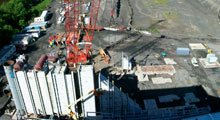
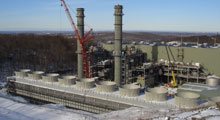
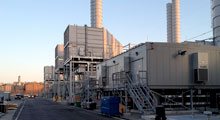
Since our founding in 1922, Frank Lill & Son, Inc. has offered a full line of services to our industrial clients nationwide. From delivering turnkey, design build projects, to self-performing construction on the most intricate of mechanical systems, to running multimillion-dollar outages and turnarounds; Frank Lill & Son, Inc. has the skill and experience necessary to deliver you a world-class project.
Frank Lill & Son, Inc. often takes on projects as an Engineer Procure Construct (EPC) or Design Build (DB) Contractor. This turn key approach allows Frank Lill & Son, Inc. to assist our clients in every aspect of their valued project...
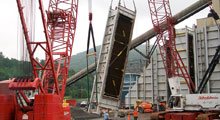
Frank Lill & Son, Inc. is often contracted by our valued clients to act as a General Contractor. In this role, Frank Lill & Son, Inc. manages all, or a significant portion of the construction of a project...
Frank Lill & Son, Inc. has recently broken into the world of construction management with a large university project in the North Eastern United States...
Frank Lill & Son, Inc. often times takes on work as a Prime/Critical/Major Mechanical Contractor. In this role it would be our intent to self-perform 100% of our work scope. Keeping in our employ a team of “A-list” superintendents...
Frank Lill & Son, Inc. has gained recognition from both utilities and private industry for our ability to perform major maintenance services when outages demand a fast response and that work be completed under tight deadlines...
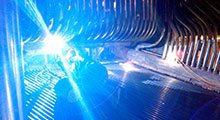
Frank Lill & Son, Inc. has extensive experience in a wide variety of welding processes, including SMAW, GTAW, Flux Core, Orbital and MIG on a broad range of metals such as carbon steel, stainless steel, inconel, chrome, hastelloy, nickel...
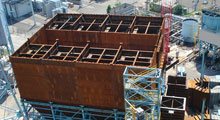
Frank Lill & Son, Inc.'s highly skilled engineers utilize the latest computer systems to provide efficient and accurate designs. Heat Recovery Steam Generators are designed to match the requirements of a variety of combustion turbine...
Frank Lill & Son, Inc. has many years of experience in replacing or adding equipment to existing boilers in order to burn alternate fuels, such as gas, oil or solid fuels. A frequent request is to replace a standard burner with a low nitrous oxide (NOx) burner...
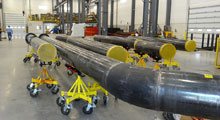
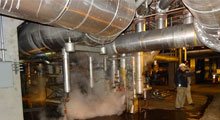
Frank Lill & Son, Inc. has a long and impressive track record of furnishing and installing a variety of pipe. We are experts with the many applications and operations that piping supports such as high pressure steam...
Frank Lill & Son, Inc. expertly furnishes and installs combustion and steam turbines complete with environmental protection equipment. We also repair and rehabilitate these turbines in projects that range...
Frank Lill & Son, Inc.’s procurement experts are the best in the industry. Our detailed familiarity with a variety of vendor’s equipment combined with our unique constructability evaluation allows us to recommend ..
When it comes to plant start up and commissioning, Frank Lill & Son, Inc. knows that safety and attention to detail are paramount above all else. Our trained staff will manage your start up needs in the most meticulous way possible; checking and double-checking that everything...
Frank Lill & Son, Inc. employs some of the industries top masons, bricklayers, and refractory experts. From minor point and patch repairs, to providing complete refractory services on total overhauls and new build...
Since our founding in 1922, Frank Lill & Son, Inc. has offered an extensive array of consulting and pre-construction services to the power generation community. Today our firm brings...
Frank Lill & Son, Inc. offers a complete line of plant control services. Frank Lill can work with you on your new control system installation, integration, renovation, or upgrade project. Offering turnkey design services...

 View More